1 sunburnt nose
2 trips to In-N-Out
3-hour walk on the beach
4 days working on a great new book
5 different coffee shops
6 things to be scared of
7 reasons not to
8 people I love
9 immovable mountains
10 mountains moved
= 1 great week.
1 sunburnt nose
2 trips to In-N-Out
3-hour walk on the beach
4 days working on a great new book
5 different coffee shops
6 things to be scared of
7 reasons not to
8 people I love
9 immovable mountains
10 mountains moved
= 1 great week.

Stu Maschowitz, of DV Rebel fame, and The Orphanage (may she rest in peace) is a leading expert on the ups and downs of the post-production tool-chain. In a vent of frustration, Stu posted a chain of comments to Twitter, a top-ten of the 15 worst things our beloved post-production apps are bad at. There’s still no great way to summarize a Twitter conversation, so I’m posting it here. Pretty great for all you post-pro pixel lovers/haters out there.
The thread begins here if you want to read it from the source.

A very interesting article from the ever-interesting GOOD magazine.
It covers the chicken/egg problem of which is better for the developing world: laptops or cell phones? I’ve witnessed the dramatic proliferation of cell phones across Africa and, along with the mobility of Toyota “matatu” van taxis, the accompanying economic activity.
…voice communications do not require literacy, and are thus more egalitarian and more inclusive.
— Iqbal Quadir, founder of Grameenphone
But Negroponte argues that while cell phones connect, laptops are a window to literacy:
Asynchronous and high latency communications is very inexpensive… When we ship 100 laptops into a village, each can have 100 different books. That means 10,000 in the village, without any connectivity other than to each other.
— Nicholas Negroponte, founder of MIT
An interesting anecdote from Negroponte:
Ten years ago, most students are MIT and Harvard wanted to start companies and make money. Today, those students want to be social entrepreneurs. They are more interested in changing the world and doing good.
h/t Kara
Ten thousand hours is the magic number of greatness
— Malcolm Gladwell, Outliers
Just read this article in Harvard Business Review. According to Malcolm Gladwell and Geoffrey Colvin, becoming great at anything — whether it’s art, business, sports etc. — requires ten years of practice and 1,000 hours of practice every year.
It’s repetitive, which means that when it’s time to perform for real (sinking a putt, pitching a product), you don’t feel the pressure. It’s informed by continuous feedback; practice only works if you can see how you’re improving. And it isn’t much fun, which isn’t all bad. “It means that most people won’t do it,” Colvin says.
— Bill Taylor, Harvard Business Review

I’m a Mac fanatic.
I haven’t always been. In my Software Engineering days I slagged the Mac as a shiny, expensive toy. Outwardly hostile, inwardly I eyed them with envy.
On the side, I built a recording and IT consulting business based on the Windows world. I would make money off of the failures of Microsoft, fixing problems that ought not to have existed. In my own creative space, I chose PCs for music & photography out of necessity. I could get discounted PC hardware, leaving more money for paying the rent.
But as I grew out of enjoying the tinkering and into actually wanting to get work done, my enthusiasm for the DIY World of Windows quickly faded.
The final straw: one day, a well-meaning roommate inadvertently plugged my PC workstation into the internet without a firewall. Within five minutes, the machine was completely locked up with malware & viruses. Not only that, but it took two days of OS updates, driver installs, and software installation to get it back to a usable state.
Ever since then I’ve been sold on the Mac.
Not long before, I had set up my first video editing suite: Final Cut Pro, and a shiny new G4. Robb, my local Mac evangelist, dropped off the machine and took it out of the box for me. He plugged in the power. He plugged in the monitor. He plugged in the keyboard & mouse, and turned it on. He dropped in the install DVD and let it churn… and that was it. 15 minutes top to tail, and I had a working edit suite.
They’re still computers, and they still drive me nuts at times. But I’ve been won over. The user interface is designed & thoroughly thought through. The APIs given to third-party developers have been created in a way to make applications have an air of familiarity, even if they do vastly different tasks. There’s consistency. There’s simplicity, with the underlying power of Unix (if I really want to hack away).
And there’s the beauty of the thing, both in the software and Apple’s renowned industrial design.
With all that, I think my favourite part about the Mac is the ecosystem it creates for 3rd-party software. While Apple covers the bases well with the included applications, every productivity or creativity task you can think of, has been… and turned into a simple program to allow you to work. Apple’s design philosophy trickles down into these applications, where interface design and engaging me as a user is as important as the functions the software performs.
They still drive me nuts. Really. But if I have to choose a desert-island companion, my Mac just might win over my camera. Maybe.
For those of you visiting this site in browsers other than Safari, I feel your pain. I recently viewed this site on another machine and much of the beauty is lost to some formatting glitches. I hope to have those fixed in the next while.
I’m happy with how often I seem to be drawn here to post. It comes and goes… but there are times this web canvas is an attractive forum for thought. When I’m in deeper trouble, I tend to be more introspective and less ends up here. I turn to my sketchpad, my personal thought-bucket. The thoughts trickle back into public places once I’ve had a “Eureka!” moment, or when I can’t hold it in any longer.
This is one of those times.

I am working out something within me that seems to nag whenever I reach a period of stability. Somehow, right now, I have more passion and creativity; but it’s stagnated, dirty water in a puddle: like I have words but nothing to say. I am more prepared than ever before to burst into what I want to do, but I’m creating less than any previous period. Why?
I feel trapped by stability.
For me, freedom is a Very Big Thing™. Keeping my options open falls above engagement in my subconscious reflexes. Options give me the illusion of control.
Bizarrely, and – this is where I’m wanting to understand myself – I pair aloofness with responsibility. I frequently bind myself to roles and ways of thinking that negatively cut down the emotional and creative side, in the name of duty – and in the name of power: power to keep my options open.
In the end I bind myself twice – to self-imposed responsibilities and exile from true engagement.
That’s why I turn to writing, sketching, drawing. Not usually here, public like this – but writing helps me work out my ideas, just like photography & music help me work out my emotions. I’ve been taught how to listen to my internal themes to avoid the siren call of distraction, and when something’s up my gut pulls me to express it so I can work things out.
And this writing, this expression is the art. It helps me remember: I am not bound to freedom. I am free so that I can live life fully – to create, engage, be broken and re-create. That, to be bound to things worth holding is not a cage.
Don’t ask yourself what the world needs. Ask yourself what makes you come alive and then go do that. Because what the world needs is people who have come alive.
— Dr. Howard Thurman
[updated to work out the 3AM writing delirium]

Now this is the most pedestrian of posts… but it’s part of a prettier picture. And this poor little clean-up appliance never gets any attention, kind of like my recent big-screen buddy. It just trundles along in the background, cleaning up after my paper-reducing, psycho-recycling ways.
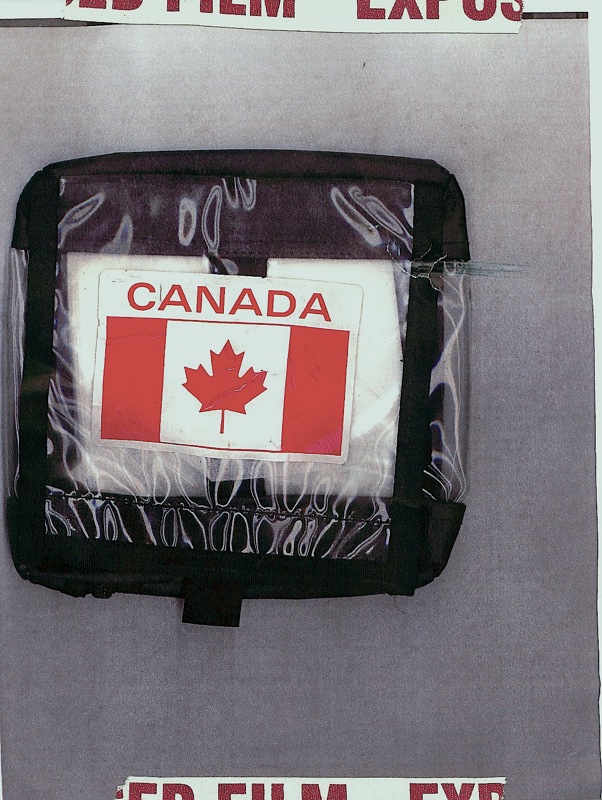
Canada, Clean & Exposed
Last night I walked outside, the air was nice – warm, clean, with a breeze. I was headed to Safeway, a block away. I picked up some fresh blueberries, some cleaning supplies and a few other things, and bought a piece of pizza for dinner on my way home. I skipped a coffee – enough to eat already.
On the walk home, I started to relax. Not the little “this is nice” relax, but the big, “I’ve found a home” relax. The people on Commercial Drive are interesting. The guy at the pizza place was intriguing – didn’t know how to use a Visa machine, probably a recent immigrant, had a fire to him that I liked. The houses are small, interesting, not cookie cutter. The streets have lots of trees and plants, and there are nice views to the mountains. People are interested in each other. People I want to get to know.
I have a cool flat, that’s “me” in the furniture, the artwork, the messiness, the order, the little tricks that make a big difference, the one-of-a-kind layout, the air, the light. I have a few people in my life whom I love, who I want to be with… and they are there for me as well.
I’ve worked the edge off a lot of the angst and anger and frustration I’ve held, me vs. them, my dependant independence and lack of emotional IQ. I’m still me, quirky and weird and not good at a lot of things… just without the edge, the neediness, the fear and anger dissipated by growing up a little bit (or maybe growing younger :)
And I have a job. One that I like, that I’m good at. Filmmaking. Photography. Storytelling.
I’ve made it.
That was the feeling. I’ve achieved all the things I really wanted to have in my life. Not like it’s a task complete and I’m moving on. More like, I’ve moved into my neighbourhood. The things I want and like and am interested in are nearby, within my reach. I can see them… some I have. I can ask for others and get them if I want or need, through a friend or my own effort.
And I can’t help but be thankful. That I’m created. That I live in Canada. That I have friends and good things. That I’ve been cared for in big and small ways.
I rarely have days like this, so I’m revelling in the enjoyment of being at peace.

I’m a bit of a backup freak. My current house-transition aside, I consistently have two or three backups of just about every piece of data I consider precious (which is most of it). When I first started contemplating moving around the continent, I began to look for an affordable & portable storage solution for all my masses of files.
I’d been here before… I have only my laptop (a Macbook Pro), which eliminates several options. I wanted something with redundancy, so it could handle a failed hard drive – which, with their spinning platters moving several thousand rotations per second fractions of a millimetre from the read head, are not known for their reliability – while still being fast enough to be usable. In previous searches I’d discovered you had to pick one of safety or speed, or be prepared to pay 4-5 times more to keep your stuff safe.
Then I ran across the Drobo, short for ‘data robot’. It uses block-level redundancy (instead of disk-level), which means it can handle any single drive failing, but the drives don’t all have to be the same. You can stuff it with whatever SATA drives you have on hand (or can afford), and expand it as your storage needs grow.
So I bought two.
And then I bought a third six months ago for a project I’m working on, along with a DroboShare, which lets you access the drives over a network. In all, 10 Terabytes of hard drives are spinning in my Drobos.
They’ve been great. They work without any management or thinking required, chugging away in the background. I use them to back up my cheap-but-speedy striped SATA RAIDs – which are fast, but not saf. So in the end I ended up with two copies of everything, one on fast local drives, the other on Drobos for backup with their redundancy and set-and-forget working style.
The only downside has been that they’re not particularly fast – 15-20 MB/s is a reasonable expectation. Better than the competition, but 10 TB takes a long time to backup at that speed.
So today, I was happy to see that they’ve released Drobo V.2, with Firewire 800 and greatly improved read & write speeds – almost triple the performance in some cases. In my mind this takes the Drobos from being mostly for backup, to being a good primary drive solution for many uses.
So if you’re in the market for some safe, speedy, affordable storage… take a look.
The world of news is changing fast. The capture, editing, and dissemination of what is newsworthy is becoming flatter, in that fewer barriers remain between the event and the reporting of the event. A few examples I’ve noted recently:
Technology is removing barriers to communication, reshaping our culture by changing the values behind what is reported: what is newsworthy becomes more closely tied to what is important to us.
Habari?